





GNU ddrescue is an effective data recovery utility. It copies data from one file or block device (hard drive, CD-ROM, flash drive, etc.) to another, prioritizing the recovery of good sectors in the event of read errors.
Key features and capabilities:
- When a damaged sector is detected, ddrescue doesn't overwrite the target file with zeros or truncate it. This allows the utility to be run multiple times on the same target file, gradually filling in the gaps missed due to errors, patch by patch.
- Merging copies (gluing): If you have multiple damaged copies of the same media (for example, two scratched CDs with the same content), running ddrescue sequentially on each of them to the same output file will most likely result in a single complete, healthy copy.
- The program works at a low level with any type of device supported by the operating system kernel (ATA, SATA, SCSI, old disk drives or SD cards).
and many other possibilities.
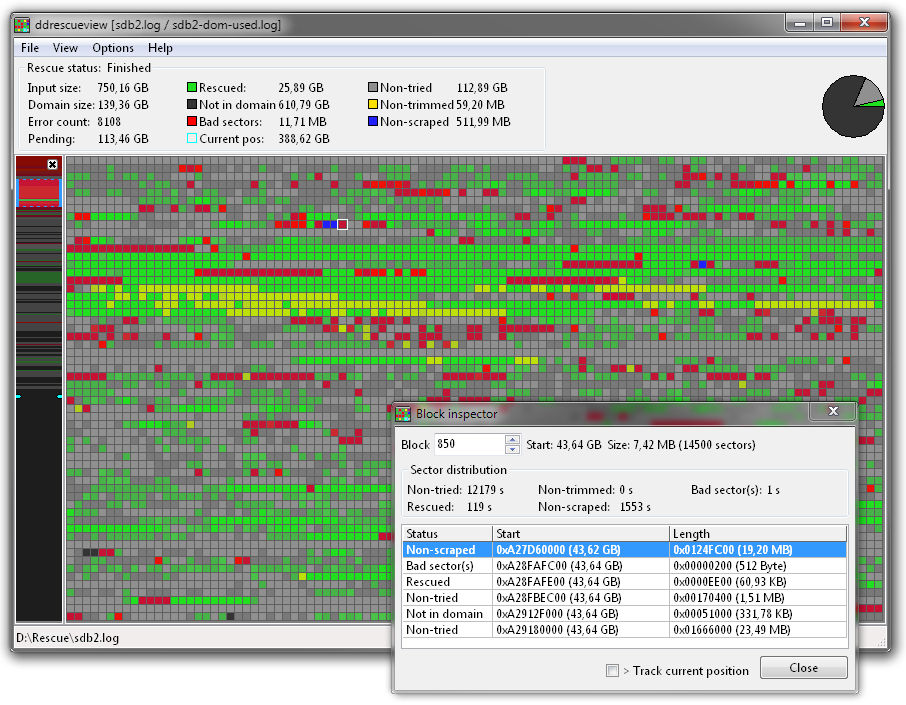
Ddrescueview is a graphical utility for visualizing the data recovery process performed by GNU ddrescue. It makes the lengthy data recovery process understandable and visual, allowing you to visually assess the extent of disk damage and the speed of the process.
Key features and capabilities:
- The program reads the map file created by ddrescue and displays it as a colored grid of blocks (very similar to the interface of older disk defragmentation programs). Each color corresponds to a specific block type (successfully read, damaged, unreadable, not yet processed, etc.).
- You can drill down to the level of individual sectors in any block of the chart and see a detailed list of map entries for that section.
- Real-time monitoring.
and others.


